

Google Customer Rating of 4.9 Out of 5

Recognized by WHO for active AFP reporting

Urinary Tract Infection (UTI) occurs when an infection spreads in any part of your urinary system including the bladder, kidneys, urethra, or ureters. It is a common condition that can be painful and is more likely to be seen in women than men. In case of severe symptoms, medical attention is required to avoid spreading the infection to the kidneys or bloodstream.
Urinary Tract Infection (UTI) is the inflammation of any part of the urinary system, often caused by the overgrowth of bacteria.
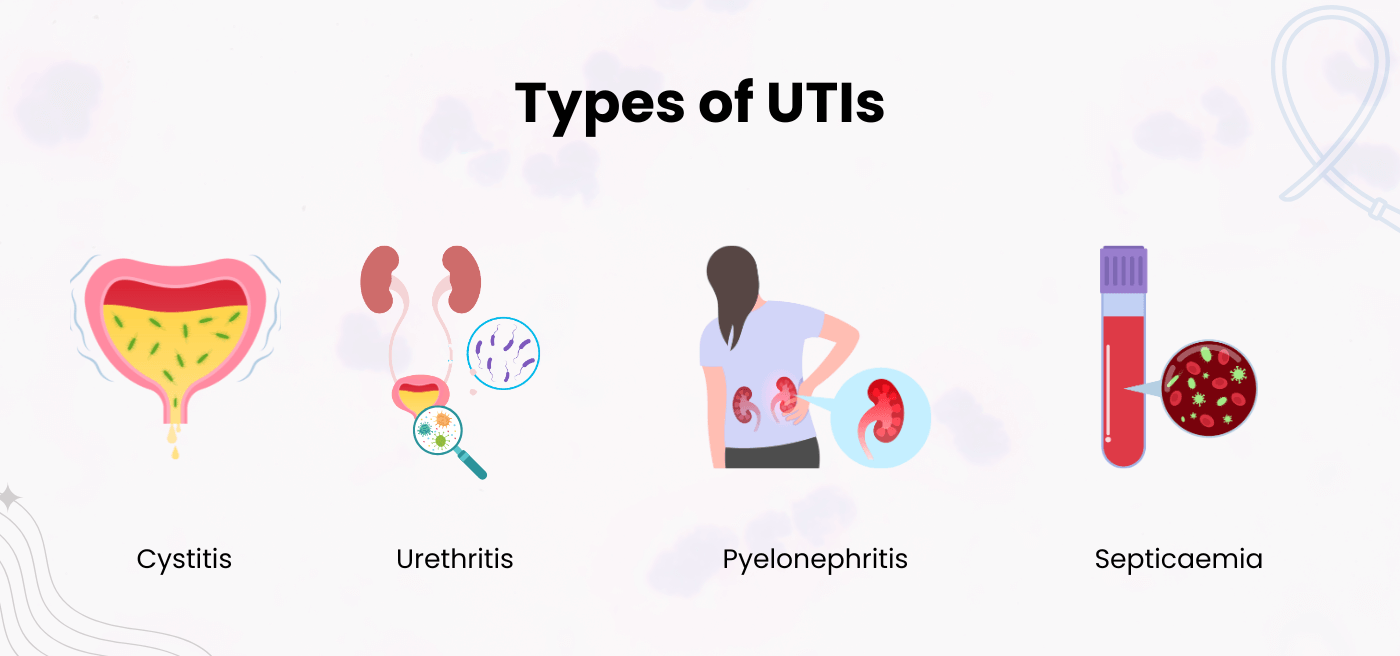
The type of UTI depends upon which part of the urinary system is affected. It can be categorized as follows:
The most common symptoms of UTI are as follows:
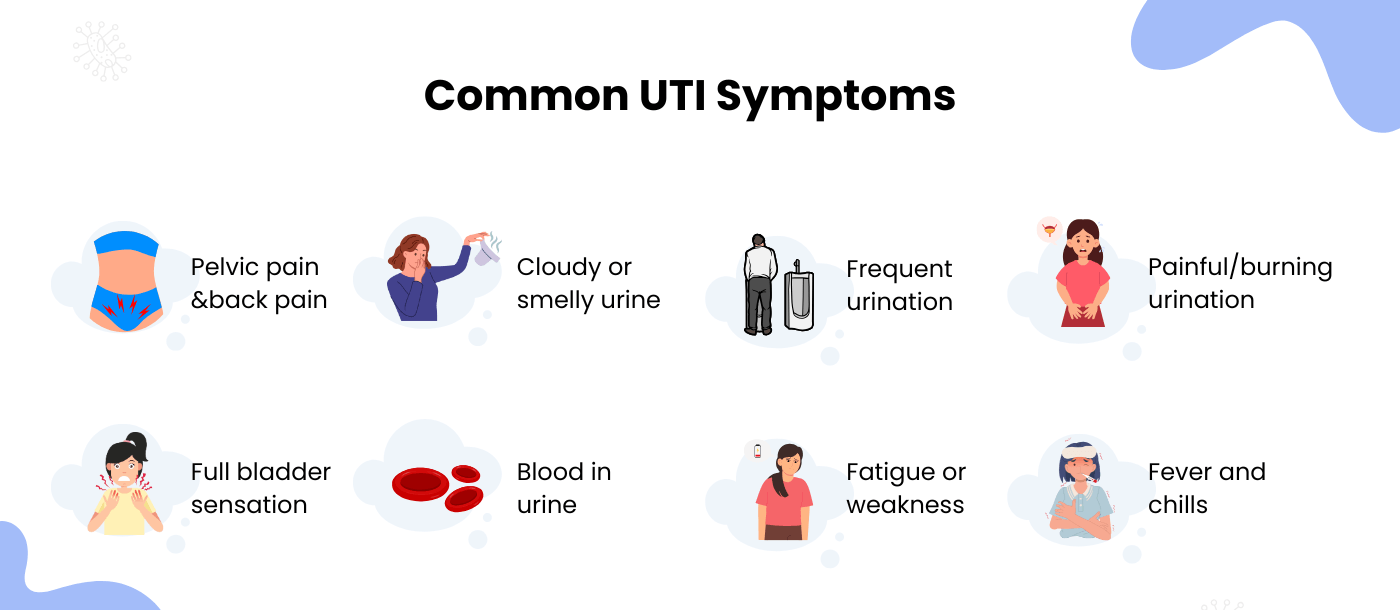
UTI symptoms in females may be more painful or uncomfortable than in men.
Generally, UTIs occur due to the overgrowth and spread of bacteria through the urethra toward other parts of the urinary system such as the bladder, or kidneys.
Women have a higher chance of getting UTIs as compared to children and men often due to the shorter anatomy of the urethra that makes it easier for bacteria to enter the bladder.
That is the reason why women are advised to wipe from front to back when using the bathroom, as the urethra is near the rectum and it may get easily infected.
Most UTIs occur due to Escherichia coli (E. coli) bacteria which is found on the skin and in the large intestine. This bacteria is likely to pass from your stool back into the bladder through the urethra if you wipe the genitals from back to front.
Sometimes, even fungal infections can cause UTIs, but it is rare. UTIs due to viral infections are even rarer.
Risk factors of UTI are as follows:
UTIs are diagnosed after studying your symptoms and assessing urine samples to check the presence of bacteria, RBCs, and WBCs. For moderate infections, your doctor might prescribe a urine culture test to identify the type of bacteria causing the infection.
In recurrent or chronic UTI infections, your doctor may conduct comprehensive tests such as:
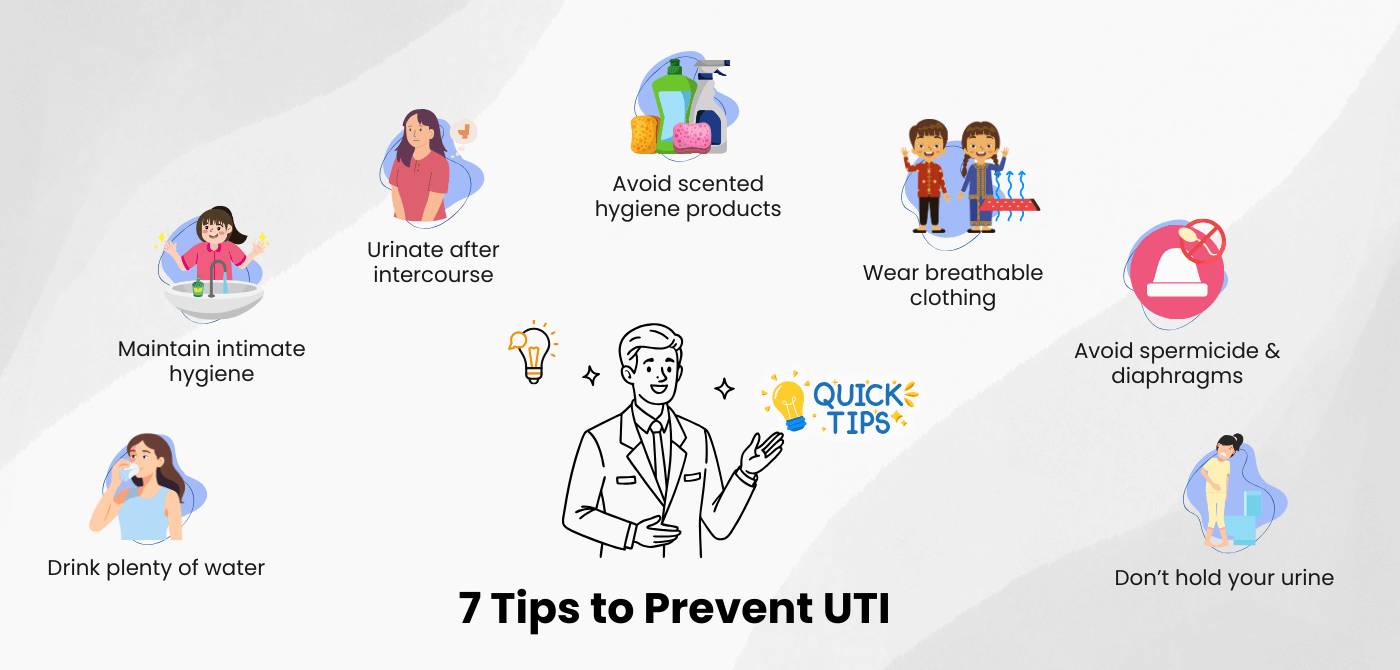
Here are some of the simple steps you can take to relieve UTI symptoms at home:
Homeopathy takes a holistic approach to treating UTIs from its root cause. Homeopathic medicines are prescribed based on the patient’s age, symptoms, and other medical conditions, if any. These medicines are 100% natural, free from side effects, and effective in treating UTIs from its core.
Some of the best homeopathic medicines for UTI include Cantharis, Mercurius, Sarsaparilla, Aconitum, Nux Vomica, Apis Mellifica, Berberis, Pulsatilla, and more.
Homeopathy can treat mild to chronic and even recurrent cases of UTI effectively and provide symptomatic relief in the long run. However, homeopathic medicines should not be taken without a prescription from an expert Homeopathic practitioner.
If you are experiencing any of the symptoms listed above, book an Online Consultation with our highly experienced Homeopathic doctor and proper UTI treatment.
Our doctor will study your case, learn your medical history and symptoms, and prescribe you a proper course of homeopathic medicine.


Plz suggest best medicine for UTI after sex
not pee cause discharge male age 50
Frqunt urtion only problem sir no.pain no smell etc
I understand your concern. In UTI, the right medicine depends on your symptoms, history and health condition—it’s not the same for everyone. Since you’re having frequent urination without pain or smell, it’s important we check the cause first.
Dear Dr
I am suffering in UTi with uritheral sticher in this regards I passed the in low quantity with many time flush and feel pain and sensation problem..
Plz tell me about the medicine or treatment..
Thanks
Farooq
Punjab (Multan)
Pakistan
Dear Farooq,
Your symptoms suggest a urinary infection along with possible urethral irritation, which needs proper evaluation before starting any medicine. In homeopathy, treatment is selected based on your complete symptom picture, not just the diagnosis—so self-medication may not give proper relief.
Don’t worry, this condition can be managed effectively with the right treatment. I would suggest you to take a short consultation so I can understand your case in detail (pain type, frequency, burning, history, etc.) and guide you with the correct remedy.
Meanwhile, drink plenty of water and avoid holding urine.