

Google Customer Rating of 4.9 Out of 5

Recognized by WHO for active AFP reporting

Erb’s Palsy is a common condition in newborns where the shoulder, arm, hand, or fingers feel weak or paralysed. It occurs due to injuries to the brachial plexus (a complex network of nerves at the neck) during birth. Most cases resolve on their own. But some cases may require medical assistance and physiotherapy exercises to prevent further damage.
Erb’s Palsy is a partial or complete loss of motion and sensation in the arm or shoulder due to neurological injury. It gets its name after Wilhelm Erb, one of the doctors who explained the condition.
The brachial plexus is a network of nerves responsible for mobility and sensory function in the arm and shoulder muscles. Any injury to the brachial plexus during delivery can result in Erb’s Palsy.
According to the AAOS (American Academy of Orthopaedic Surgeons), 1 or 2 infants out of every 1000 newborns go through brachial plexus birth palsy. Mostly, it occurs only on one side.
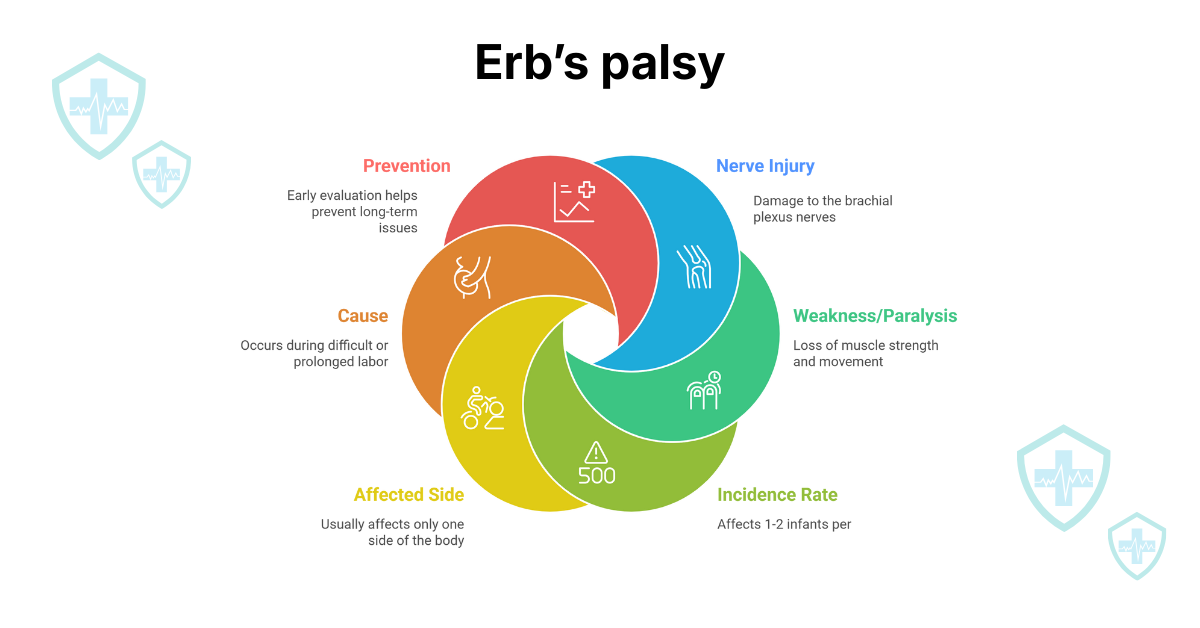
The brachial plexus is the network of nerves carrying electrical signals from the brain to control arm and shoulder movements. When the nerves are injured, these signals are blocked, leading to muscle weakness or loss of motion.
Symptoms of Erb’s Palsy are as follows:
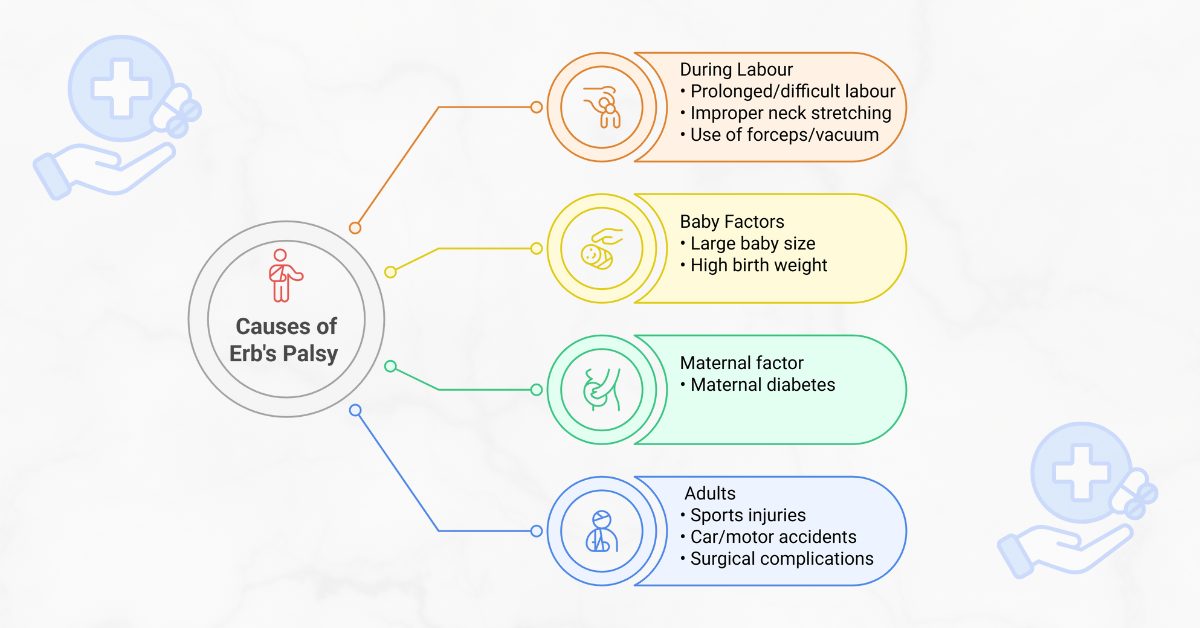
1. Prolonged labour: Improper stretching of the baby’s neck during delivery is one of the common causes. Excessive use of birth tools like vacuum extractors or forceps is also a main cause. If the mother has a small body with a small birth canal, it increases the risk of prolonged labour. It could also occur due to the infant’s position in the uterus. And, it may rarely occur during a Caesarean birth as well.
2. Foetus’s large size or high weight: This increases the chances of difficult or prolonged labour. Factors linked to the baby’s high birth weight are gestational diabetes, genetics, maternal obesity, and post-term delivery.
3. Maternal diabetes: It is linked to the baby’s high birth weight, increasing the chances of a difficult delivery.
4. Shoulder dystocia: It occurs when an infant’s head is delivered, but the shoulders are stuck in the mother’s pelvis. To release them, doctors may tilt the head to the opposite side, stretching the neck. This strains the upper brachial plexus nerves (C5-C6), causing Erb’s Palsy.
In adults, the causes of Erb’s Palsy are:
Some of the risk factors associated with Erb’s Palsy are:
Mild cases of Erb’s Palsy may resolve on their own. Moderate to severe cases require medical attention and rehabilitative therapy. Sometimes, it may not recover fully, leading to a limited range of motion in the arm permanently.
There are 4 types of nerve injuries in Erb’s palsy:
1. Rupture of the nerves, but not from the spine.
2. Avulsion (ripping) of the nerves from the spine, which is a severe condition.
3. Neuroma is when a torn nerve heals, but leaves scar tissue behind. This scarred tissue or tumour exerts pressure on the injured nerve and blocks the brain signals to the muscles.
4. Neurapraxia is the stretching of nerves without any tear. It is the most common type of Erb’s Palsy injury.
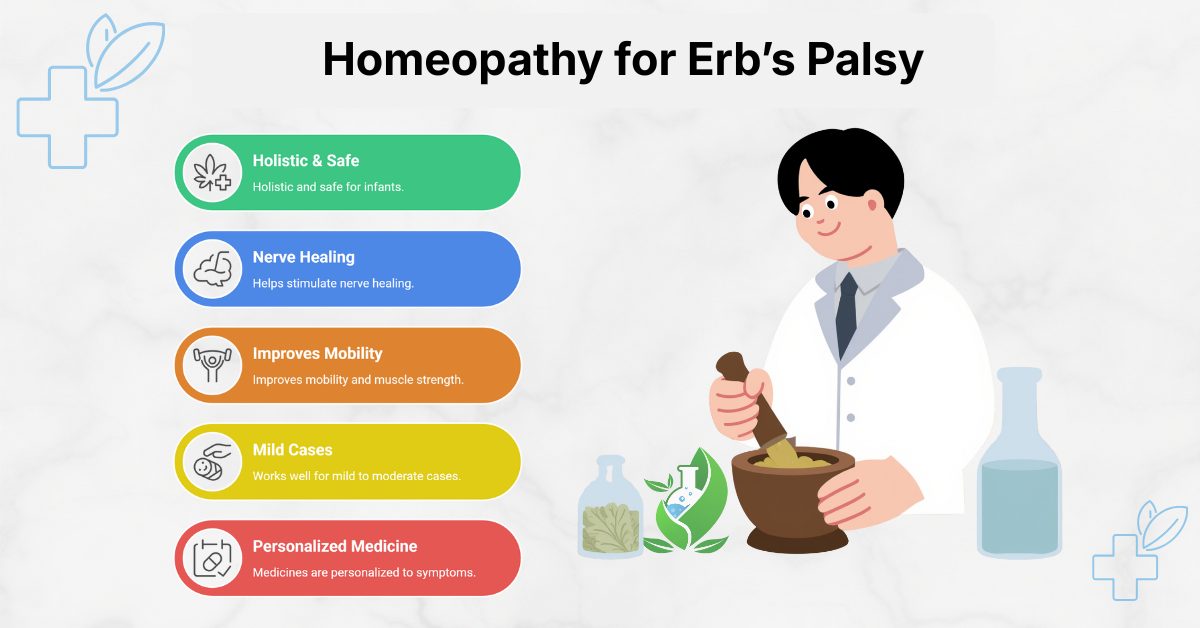
Mild symptoms of Erb’s Palsy heal on their own. Homeopathy can effectively treat mild to moderate cases along with physiotherapy exercises.
Homeopathy takes a holistic approach as it stimulates the body’s immune response to aid nerve healing. Homeopathic medicines are prescribed based on the patient’s unique symptoms and complete medical history assessment. It is important to consult an experienced Homeopathic doctor to understand the severity and proper diagnosis.
Newborn babies are likely to get Erb’s Palsy due to difficult labour. It is also known as brachial plexus birth injury, brachial plexus birth palsy, or obstetric brachial plexus palsy. Rarely, it could also happen to adults who go through traffic accidents, industrial accidents, or who severely injure their brachial nerves during sports.
Yes, it is a very common condition in newborns. 1 or 2 in every 1000 babies have this condition per year.
No, Erb’s Palsy is caused by nerve damage that may cause partial or full paralysis in the arm. It is not life-threatening.
Not all cases are preventable. Controlling maternal obesity and diabetes can help. Adults can prevent this condition by wearing protective gear when riding bikes or during sports.
It depends on the severity of nerve damage. Mild to moderate cases will heal with medications and physical therapy. Severe cases may require surgery or cause permanent disability. Early diagnosis and treatment are important.
Erb’s Palsy is brachial plexus injury that can lead to muscle weakness or loss of mobility in the arm. Homeopathy offers natural, completely safe treatment for Erb’s Palsy aimed to relieve pain, heal nerves, and improve mobility in the affected arm.
The homeopathic medicines, along with physiotherapy exercises, can enhance recovery and promote muscle and sensory function in the arm.
If you are experiencing any of the symptoms listed above, feel free to book an Online Consultation session with our highly qualified Homeopathic doctor. At PMRI, the doctors have years of experience in effectively treating varied paralysis cases with the best results.
The treatment course will depend on your individual symptoms and the severity of the nerve damage.
Get in touch now!

