Depression is a neuropsychiatric disorder that causes extreme feelings of sadness, grief, and emptiness consistently for over 2 weeks, sometimes without any reason. You lose interest in everything and find it difficult to concentrate, do daily tasks, communicate, eat, and even sleep. Oftentimes, depression may lead to suicidal thoughts as well. Depression can affect people of any age. It requires long-term treatment, and most people can feel good with medication and talk therapy. Homeopathy is effective for the treatment of mild cases of depression.

What is Depression?
Depression, also called Major Depressive Disorder, Clinical Depression, or Major Depression, is a chronic, intense feeling of sadness, pessimism, and emptiness that makes it difficult to sleep, eat, work, think straight, or perform day-to-day activities.
Major life events such as loss of a loved one, losing a job, losing wealth, health issues, etc., can trigger depression symptoms.
Symptoms of Depression
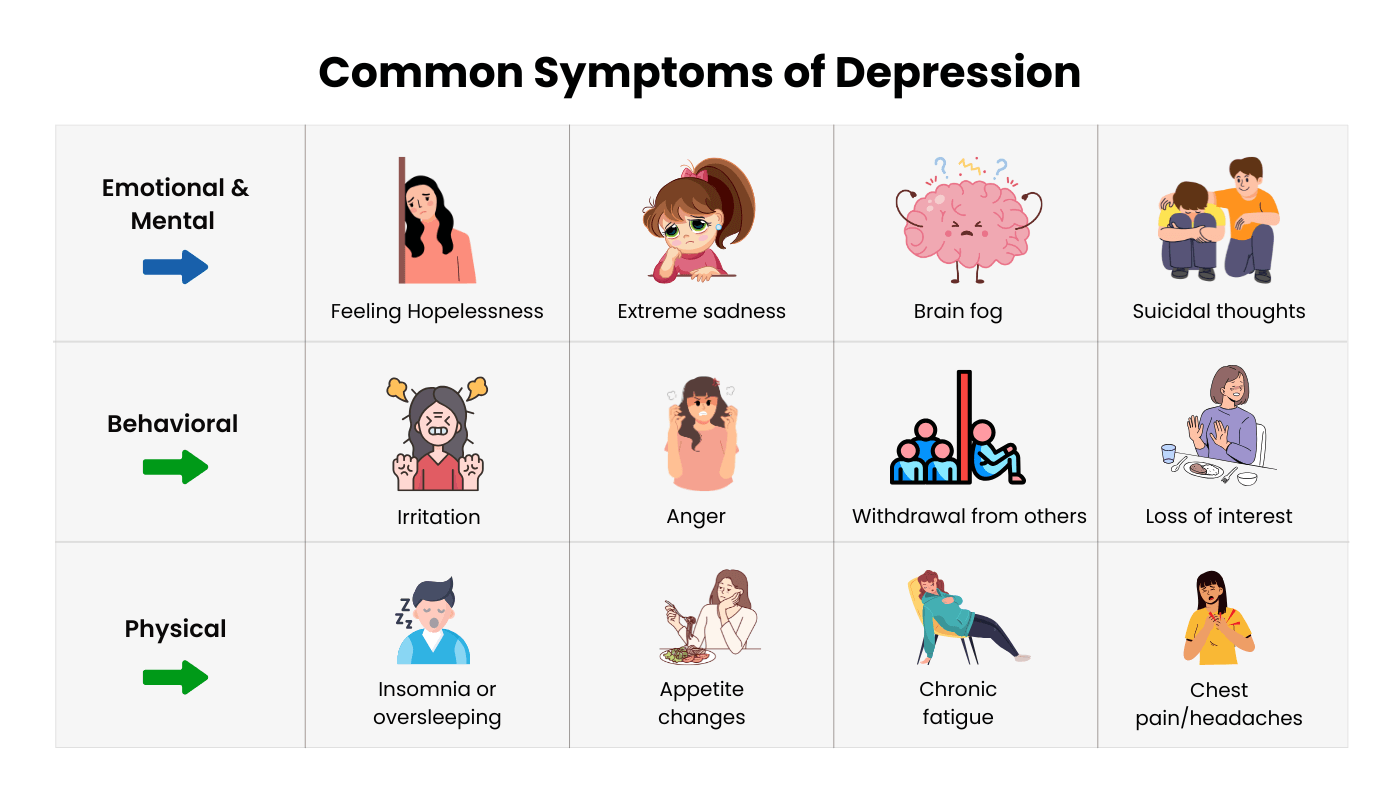
The following are the common signs and symptoms of depression, which could be moderate or severe:
- Feeling empty, worthless, and hopeless
- Extreme feelings of sadness, grief, and anxiety
- Pessimistic thoughts that you cannot control
- Restlessness, irritation, mood swings, frustration
- Losing interest in everything
- Finding it difficult to eat, sleep, work, and communicate
- Feeling weak, fatigued
- Not able to sleep or remain asleep
- Hypersomnia (excessive sleep)
- Losing appetite
- Excessive appetite (hyperphagia)
- Eating disorders
- Brain fog, difficulty concentrating, or remembering
- Digestive issues
- Suicidal thoughts and isolation
- Low self-esteem
- Anxiety and panic attacks
- Physical issues such as chest pain, chronic headache, heart palpitations, tightness in the chest, digestive problems (constipation or diarrhoea), etc.
Everyone with depression may not show all the symptoms listed, just a few.
Causes of Depression
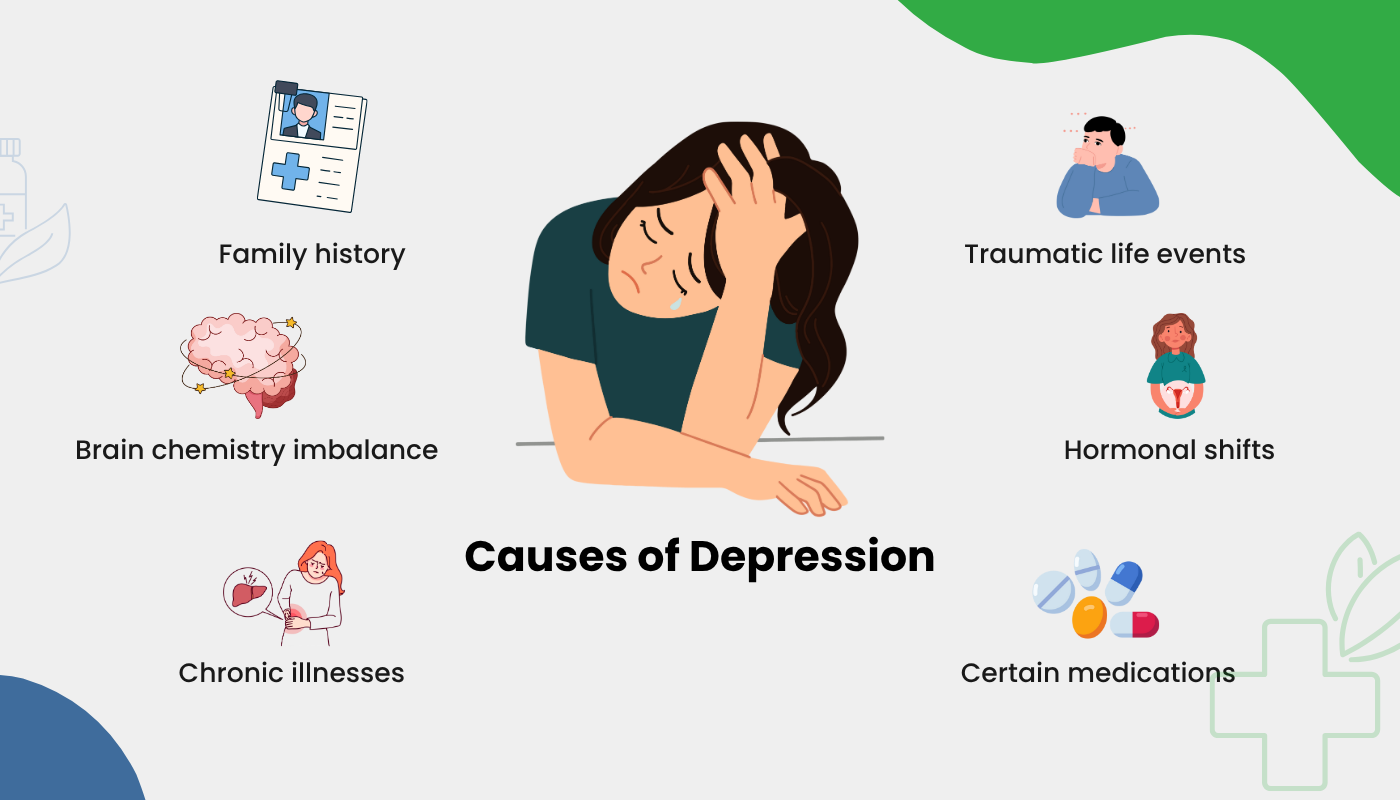
Researchers reveal that multiple factors play a vital role in causing depression, such as:
- Genetic: You are likely to develop depression if you have a family history of depression (especially in parents or siblings).
- Brain Chemicals or Structure: Disturbance in the brain chemicals or neurotransmitters, such as dopamine and serotonin, can lead to depression. Likewise, the brain’s frontal lobe is the largest and is responsible for high-level cognitive functions. If it is less active, you may develop depression.
- Health conditions such as diabetes, heart problems, cancer, and other chronic illnesses may cause depression
- Traumatic life events such as losing a loved one, divorce, losing a job, lack of friends/family, social isolation, childhood abuse, etc., may trigger depression symptoms.
- Some medications may also lead to depression, such as birth control/sleeping pills, or blood pressure medicines
- Changes in female hormones like progesterone and estrogen may increase the chances of developing depression
- Thyroid problems, menopause, pregnancy, postpartum, perimenopause, PMS, etc., may trigger depression.
- Disturbing or bullying environment in school, work, or home, and societal pressure to look or behave a certain way may also trigger depression
Women are more likely to get the condition than men. And, it can simultaneously occur with other health conditions like cancer, chronic illnesses, cardiovascular diseases, diabetes, etc.
Types of Depression
- Major Depression Disorder (MDD) is the most severe and common type, and it occurs when a person experiences emptiness, loss of interest for over 2 weeks, and is not able to perform simple daily activities.
- Persistent Depressive Disorder (dysthymia) is when moderate depression symptoms last for at least 2 years.
- Seasonal Affective Disorder: As the name suggests, this is a type of MDD that occurs seasonally, generally during fall or winter, due to a lack of sunlight. It is likely to affect people who reside in places with intense or long-lasting winters.
- Psychosis is when depression is accompanied by hallucinations or delusions
- Bipolar disorder is indicated by depressive episodes, irritability, extreme mood swings, and hyperactivity.
- Postpartum/Pregnancy/Menopause depression occurs due to hormonal and physical changes in women’s lives.
- Disruptive mood dysregulation disorder (DMDD) is a condition that leads to repetitive anger outbursts and intense irritation in teenagers.
- Premenstrual dysphoric disorder (PMDD) is when symptoms of PMS (premenstrual syndrome) are accompanied by other symptoms such as depression, anxiety, excessive irritation, and mood swings. Symptoms tend to be intense, but they may subside after the period.
Risk Factors
People with the following health conditions are more likely to have depression symptoms:
- Stroke
- Neurodegenerative diseases such as Parkinson’s or Alzheimer’s disease
- Cancer
- Chronic aches
- MS (Multiple Sclerosis)
- Seizure
- People with a pessimistic mindset, low self-esteem, and an overly dependent nature
- Addiction to drugs or alcohol, which are depressants
- Vitamin D deficiency
- Brain injury
Homeopathic Treatment for Depression
Depression is a common mental disorder that affects a person’s cognitive ability and sometimes physical well-being as well.
Homeopathy is a therapeutic, 100% natural way of curing mild and moderate cases of depression. It takes a gentle, holistic, and effective approach to treating depression in the long run. It works by treating the symptoms of chronic anxiety/insomnia and improving cognitive function and sleep function.
Each person may suffer from different depression symptoms and require a unique selection of homeopathic medicine. Hence, it is imperative to consult an experienced homeopathic doctor for proper diagnosis and treatment of depression.
Conclusion
Depression is a chronic, common psychiatric disorder that affects 1 in 6 people in the U.S at a given stage in their lifetime. Early detection and homeopathic treatment can cure mild to moderate symptoms of depression.
If you are suffering from any of the depression symptoms stated above, book an online consultation session with our expert homeopathic practitioner!
He will learn your medical history, symptoms, lifestyle, etc., and suggest a proper course of medicines based on the severity of your symptoms.
Contact us today!